

Industrial gearboxes serve as the "power regulation core" of industrial machinery, with the primary mission of converting the high-speed, low-torque power from prime movers such as motors into the low-speed, high-torque (or vice versa) required by actuators, adapting to the operational needs of various equipment like fans, machine tools, and conveyors. Their operation is based on the physical logic of gear meshing transmission, where the gear ratio is adjusted by combining gears with different tooth counts: the greater the ratio between the driving gear and the driven gear, the higher the output torque and the lower the speed, and vice versa, achieving precise speed and torque regulation.
The core structure includes the input shaft, output shaft, intermediate shaft, gear set (spur, helical, or bevel gears, etc.), bearings, and housing. The mainstream designs adopt either a fixed-shaft or planetary gear configuration. During operation, the power from the prime mover is transmitted via the input shaft and transferred through gear meshing. The fixed-shaft design achieves gear ratio adjustment by switching between different gear pairs, while the planetary gear design enables multi-speed and high-reduction-ratio power output through the combined motion of the sun gear, planetary carrier, and ring gear, delivering high transmission efficiency (typically 90%-98%) and strong load-bearing capacity.
The key features include a compact structure, a wide torque capacity range, reduced gear wear through a lubrication system, operational stability ensured by housing sealing, and the ability to adapt to complex industrial conditions such as high temperatures, heavy loads, and dust. It serves as the core power transmission hub in industrial production.
Introduction To The Working Principle Of Industrial Gearboxes
Popular Products

Vertical Feed Mixer Gearbox
Vertical TMR Mixer Gearboxes are new type gearbox assemblies, self-developed by our company.With their...
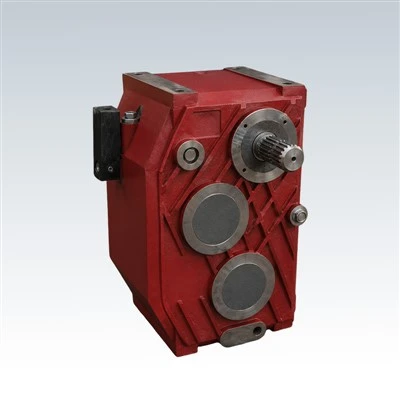
Heavy Duty Feed Mixer Gearbox
Model NO:XHG07 Series
Layout:Vertical
Type:Bevel Gear
Layout:Vertical
Type:Bevel Gear
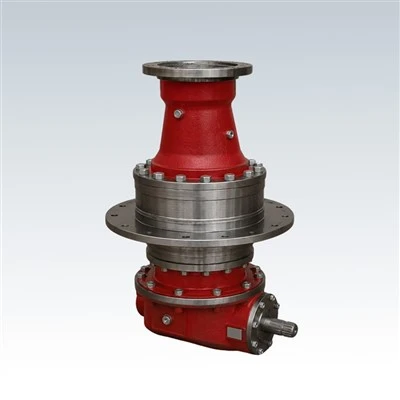
TMR Vertical Mixer Gearbox
Vertical TMR Mixer Gearboxes are new type gearbox assemblies, self-developed by our company.With their...

Planetary Fodder Mixer Gearbox
XHG05 is a new type planet speed reducer used in fodder mixer, self-developed by our company.
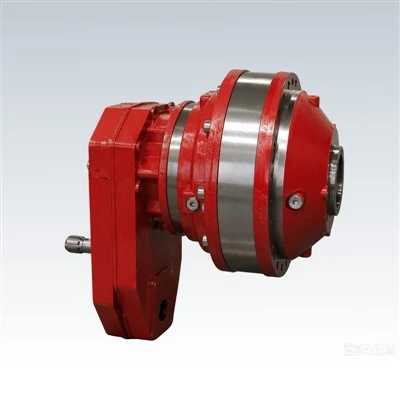
Horizontal Feed Mixer Gearbox
Horizontal TMR Mixer Front Transmission Case is a kind of gearbox with two shifts, self-developed by our company....

Vertical Mixer Transmission Gearbox
Vertical TMR Mixer Front Transmission Case is a kind of gearbox with two shifts, self-developed by our company....