

As the "power heart" of tractors, domestic tractor gearboxes have seen sustained and rapid growth in foreign trade exports, driven by product structure upgrades, improved technical standards, and policy dividends. The latest customs statistics show that during the period from 2023 to 2025, the export value of domestic tractor gearboxes experienced a compound annual growth rate (CAGR) of 41.3%. In 2025 alone, the export volume exceeded 11,400 batches, and the global tractor gearbox market size surpassed RMB 18.2 billion. The proportion of Chinese products in the global market has increased to 30.8%, completely changing the previous market landscape dominated by single regional brands. In terms of product types, the export proportion of high-end gearboxes such as power shift (PS) and continuously variable transmission (CVT) jumped from 12% in 2021 to 35% in 2025. The export volume of gearboxes for models with 50 horsepower and above increased by more than 50% year-on-year, and the export volume of high-end products with 100 horsepower and above increased by 294.6% compared to 2019. Product structure optimization has become an important support for export growth.
The continuous increase in export volume is closely related to the optimization of the global trade policy environment and the improvement of product technology adaptability. As the core framework of regional trade cooperation, since the entry into force of the Regional Comprehensive Economic Partnership (RCEP), the tariff reduction and exemption policy for agricultural machinery accessories trade among member countries has continuously released dividends, forming a free trade network covering 15 countries. According to the tariff commitment schedule of the agreement, the "zero-tariff during the transition period" model is adopted for tractor gearboxes and related components among most member countries, with tariffs gradually reduced to zero within 10-20 years, and some member countries have even achieved "immediate zero-tariff" treatment. The policy dividend directly drives trade growth. In 2024, the trade volume of agricultural equipment accessories among RCEP member countries increased by 28.4% year-on-year. Among them, lightweight and flexible shift gearboxes suitable for hilly terrain in Southeast Asia became the main export products, accounting for up to 45% of exports to ASEAN countries. ASEAN has replaced traditional markets as the largest trading partner for Chinese agricultural machinery accessories. In response to regional operational needs, domestic gearboxes have been continuously optimized in structural design, such as enhancing sealing and leakage prevention performance for paddy field operations in Southeast Asia, improving transmission efficiency and noise reduction for the high-end markets of Japan and South Korea, and precisely adapting product characteristics to further amplify the tariff policy dividend.
The agricultural modernization needs and policy support of countries along the "Belt and Road" have further expanded the export space for gearboxes. With the continuous improvement of agricultural mechanization levels in these countries, the proportion of China's agricultural machinery accessories exports to the region has increased from 41.5% in 2021 to 54.3% in 2025, a rise of 12.8 percentage points over five years. Several countries along the route have introduced special policies to support agricultural machinery imports. Among them, Uzbekistan's Presidential Resolution No. 431, which came into effect at the end of 2024, specifies that domestic agricultural machinery manufacturing enterprises can import parts for their own agricultural machinery free of customs duties until January 1, 2028. Additionally, agricultural technology service enterprises are eligible for a 50% reduction in land and property taxes. This policy directly drove the growth of China's agricultural machinery-related exports to Uzbekistan, with China's agricultural machinery exports to Uzbekistan reaching US$870 million in 2025, a year-on-year increase of 35%. Among these exports, the penetration rate of high-torque, multi-speed gearboxes suitable for large-scale farming in the region continued to increase. For harsh operating environments such as high temperatures and dust in Central Asia and Africa, domestically produced gearboxes have optimized their cooling systems and filtration devices. Products certified according to GB/T 19142-2019 "Tractors - Gearboxes - Endurance Test Method" maintain oil temperature control at ≤110℃ and noise increase at ≤3dB (A) under continuous heavy-load conditions, with no leakage in sealing performance, fully meeting the stringent reliability requirements of the international market. In 2025, exports of durable gearboxes to Africa increased by 46.6% year-on-year.
From the perspective of regional distribution and product segmentation of export data, emerging markets have become the main driving force for growth, and product technology iteration is accelerating. The agricultural mechanization rate in Central Asia, Africa, and other regions is less than 40%, far below the global average, making them the largest incremental markets in the future. The agricultural modernization plans in these regions provide ample room for domestic gearboxes. Taking Central Asia as an example, the relevant countries have invested over ten billion US dollars in agricultural modernization plans. Uzbekistan alone plans to purchase 10,000 various types of agricultural machinery in 2026, driving a surge in demand for high-horsepower tractor supporting gearboxes. The export volume of power shift gearboxes in the 260-350 horsepower range has increased significantly year-on-year. At the same time, the upgrading of demand for green and low-carbon transmission components in European and American markets has also opened up high-end market channels for domestic gearboxes. Hybrid ECVT and electric AMT gearboxes suitable for new energy tractors have become new growth points for exports. These products reduce energy consumption by optimizing transmission efficiency, with some models achieving a 20% increase in operational efficiency and a 30% reduction in energy consumption. The export of related products in 2024 increased by over 35% year-on-year. In addition, the mutual recognition support of the OECD certification system has facilitated high-end exports. Domestic testing institutions have completed official OECD tests for about 190 models of tractor gearboxes, and the reports issued have been mutually recognized by OECD member countries worldwide, significantly reducing export costs and technical barriers for enterprises.
The guidance and support of domestic policies have also injected momentum into the growth of gearbox exports. The No. 1 central document of 2025 has included new energy agricultural machinery in the key category of "preferential subsidies for superior machines". Provinces such as Jiangsu and Anhui have subsidized hybrid infinitely variable speed tractors with 200 horsepower or more with 175,000 yuan, directly promoting the upgrading of transmission systems towards electrification and intelligence. Under the guidance of policies, domestic tractor gearboxes have continuously improved in terms of technical adaptability and environmental performance, gradually meeting international compliance requirements in different regions. For the Eurasian Economic Union market, products have passed EAC certification and met the requirements of TR CU 031/2012 safety technical regulations for braking performance and noise control. For the EU market, they meet electromagnetic compatibility (EN 55032 Class B) and RoHS hazardous substance restriction standards, laying a solid foundation for export growth.
Industry experts analyze and point out that the global market size of tractor gearboxes will continue to expand in the future. It is expected that the global transmission system market will maintain a steady compound annual growth rate from 2024 to 2030, and the market size in 2030 will double compared to 2025. Among them, high-end products such as power shift and continuously variable transmissions, as well as electric drive gearboxes suitable for new energy models, will become the main sources of growth. At the policy level, the continuous implementation of tariff reductions under the Regional Comprehensive Economic Partnership (RCEP), the deepening of agricultural cooperation under the Belt and Road Initiative, and the introduction of preferential policies for agricultural machinery imports by more countries will further reduce trade barriers. However, the industry still needs to address international compliance challenges such as technical standard certification and carbon footprint disclosure. In the future, it is necessary to continuously strengthen research and development in durability, intelligence, and low-carbon technologies. Through product performance upgrades and policy adaptation, the industry can consolidate and expand its global market share, making domestic tractor gearboxes the core equipment support for global agricultural modernization.
Policy Dividends Continue To Be Released, With Domestic Tractor Gearbox Exports Increasing By Over 40% in Three Years
Popular Products

Vertical Feed Mixer Gearbox
Vertical TMR Mixer Gearboxes are new type gearbox assemblies, self-developed by our company.With their...
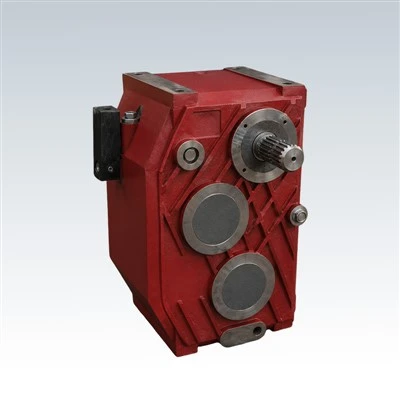
Heavy Duty Feed Mixer Gearbox
Model NO:XHG07 Series
Layout:Vertical
Type:Bevel Gear
Layout:Vertical
Type:Bevel Gear
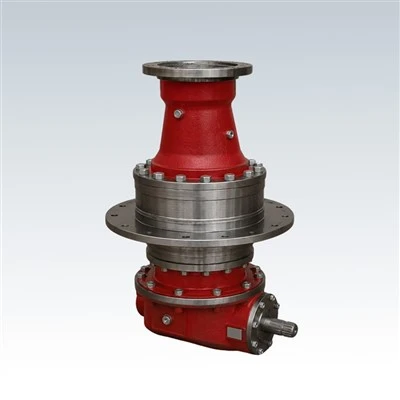
TMR Vertical Mixer Gearbox
Vertical TMR Mixer Gearboxes are new type gearbox assemblies, self-developed by our company.With their...

Planetary Fodder Mixer Gearbox
XHG05 is a new type planet speed reducer used in fodder mixer, self-developed by our company.
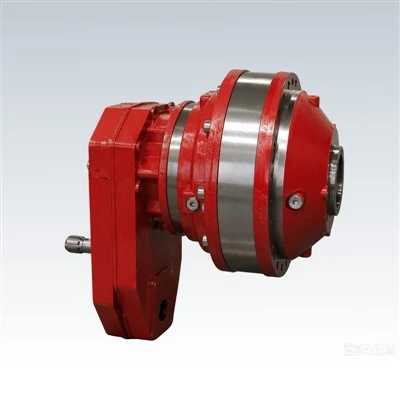
Horizontal Feed Mixer Gearbox
Horizontal TMR Mixer Front Transmission Case is a kind of gearbox with two shifts, self-developed by our company....

Vertical Mixer Transmission Gearbox
Vertical TMR Mixer Front Transmission Case is a kind of gearbox with two shifts, self-developed by our company....